
THE AUGUST PROBLEM
Enough space isn't the same as enough plan
Most backyard gardens have enough space to grow a lot of food. The tricky part is your sowing dates - and it can affect your garden in different ways every year.
One or two sowing weekends in May buys you a lot of harvest in July or August. Then beds end up sitting empty while you're back to buying veggies at the store.
Spring greens come out in June and the space just sits there until you get around to it. Several idle weeks per bed per year add up to a whole crop you never grew.
Beds planted on the same day need transplanting, staking and picking on the same day. Spread the sowings and you spread out the work days.
HOW BACKYARD GARDENERS USE SEEDTIME
Four steps, then the season runs itself
Type in your zip code and Seedtime pulls your average first and last frost dates and the length of your season. Every date on the rest of this page is worked out from your frost dates, not from a seed packet’s national average.
Lay each raised bed out at its real size in the layout planner. Seedtime fills in the spacing and works out how many plants a 4 x 8 bed actually holds as you drag crops to fill in your beds. Or use square foot gardening squares or your own spacing in inches, so you know the count before you order seed.
Pick from 9,705+ built-in crops and varieties and Seedtime schedules the plantings from your frost dates: sow inside, transplant, first harvest, and the day the bed comes free. Add succession plantings of the same (or another) crop to fill the season, so they mature in sequence instead of together.
Today’s tasks are three taps away on your phone, each tagged with the crop and the bed it belongs to. Anything you miss collects in "Overdue" with the date it was due, so a rained-off weekend never turns into a lost month.
HOW MANY PLANTS ACTUALLY FIT
Square foot squares, or your own inches
Set a bed’s real dimensions and Seedtime divides it the way you garden. Square foot gardening mode rules the bed into one-foot squares and fills each one with the right count for the crop: sixteen carrots, nine beets, one tomato. Or switch the whole bed to default bed spacing or your own custom spacing in inches (or cm) and it works the numbers out from that instead.
A rectangular raised bed is exactly the shape the free plan covers, up to eight of them in one layout.
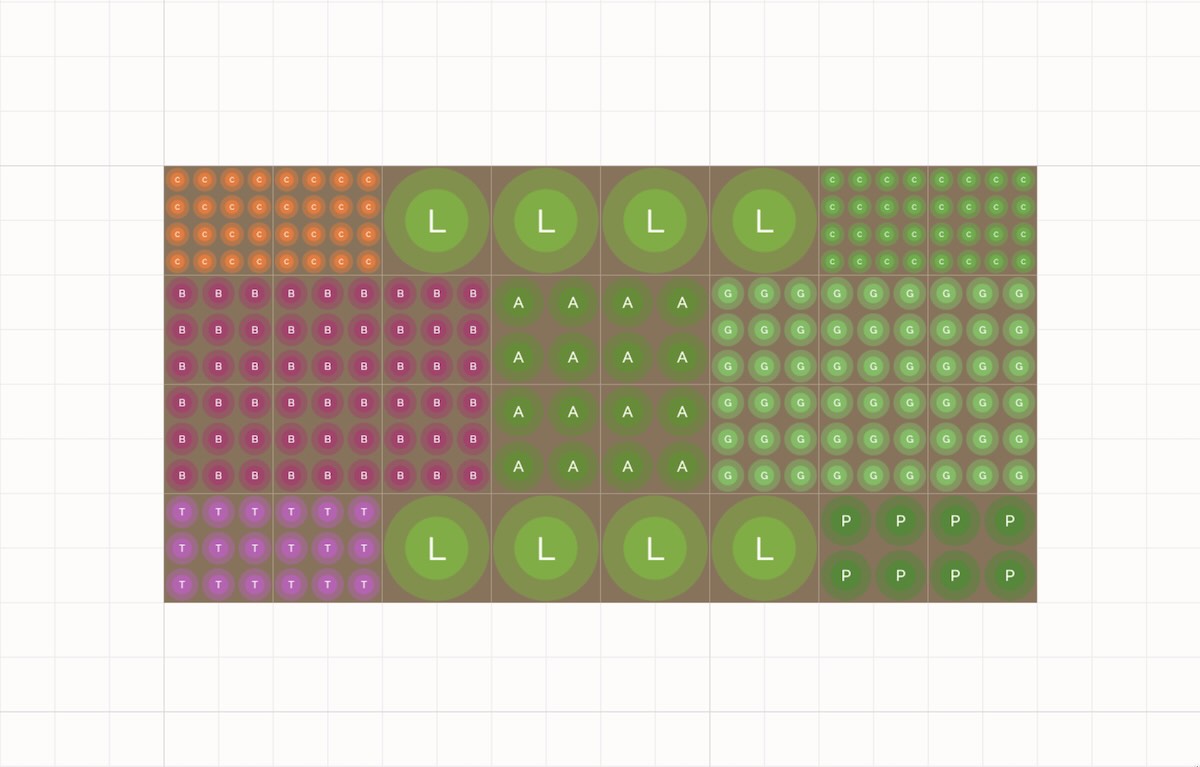
THE SAME BED, TWICE THE SEASON
One 4 x 8 bed. Two ways to plant it.
Nothing changes about the bed, the soil or the square footage. The only difference is which dates the seed went in on and the sequence of crops.
[[ stripNote ]]
IN THEIR OWN WORDS
Gardeners with a few beds and a long season
“I’m a first time backyard gardener with a family of 6. I wanted to start transitioning to eating fresh vegetables. But, I had absolutely no clue where to begin. Seedtime made it so easy to customize what I wanted to grow. Then all I had to do was follow their directions of when to seed, how long to cultivate, and I’m looking forward to the harvest.”
“Seedtime is allowing me to expand my growing space without building extra beds. I’m learning so much about succession and crop rotation in the process without having to spend hours researching from multiple sources.”
“Made me much more confident that I can jump in and plant a high yield garden in my new 3x14 2’ tall raised bed garden and still get a great all season garden for just me, with some to give away.”
“Seedtime has made my garden planning so easy this year! I have everything in one place. With new garden beds I have been able to add the layout and plan all my garden as well as advancing into adding successions.”
WHAT IT COSTS
A backyard of raised beds is free to plan
The free layout covers up to 8 rectangular beds, and a raised bed is already a rectangle (usually), so nothing about planning a backyard of beds needs a paid plan to start. Unlimited planting schedules means the successions on this page are free too.
More than eight beds, adding more done-for-you Garden Block Plans, a second layout for a different garden, round or L-shaped beds, your own custom crops and varieties, or the weather forecast built into the calendar. Those start at $7 a month billed yearly.
Compare plansGOOD TO KNOW
Backyard gardening questions, answered
Eight. The free plan gives you one visual layout holding up to 8 rectangular beds, plus one planting calendar with unlimited planting schedules on it. Non-rectangular shapes and extra layouts come with the paid plans.
Yes, and per bed rather than per garden. Put one bed on square foot squares and Seedtime fills each square with the right count for its crop; put the next bed on your own spacing in inches and it works the numbers out from that instead.
That's the point of it. Repeat sowings of the same crop are scheduled as separate plantings with their own seeding, transplant and harvest dates, all on one calendar, so the follow-on crop is already started when the first one comes out. You can add successions manually or use done-for-you Garden Block Plans to plan entire sequences of crops in one shot.
Anything past its due date collects in the Overdue group with the date it was meant to happen, so you catch up in order rather than guessing what slipped. Every task carries a start date and a due date, so a busy week has somewhere to move.
Containers, balconies and GreenStalks, with successions that keep a small space producing.
See how HomesteadersFood-scale planning: succession waves, preservation crops and harvest tracking for the pantry.
See how Market farmersSequence plantings and harvest windows so the farm stand never sits empty all season.
See howPlan the beds you already have
Create your free account, draw your beds, and let Seedtime tell you what to sow this week and what comes out to make room for it.
Plan My Garden FreeFree forever · No credit card required
Seedtime is the free online garden planner for real gardens - a personalized planting calendar, a garden layout planner with square foot gardening built in, and AI planning tools for vegetable gardens, flower gardens, raised beds, and vertical planters.